
Thinking of building your own brokerage firm?
It sounds exciting, but do you really know how much money you need to start and run it?
Many people jump in without knowing the full cost and later struggle with unexpected expenses.
What if you knew all the main costs in advance and avoided mistakes that could cost you a lot later?
Keep reading to learn the real cost of starting a brokerage firm and how to plan your journey smartly.
Key Takeaway
- Starting a brokerage can cost $45,000 to $100,000+, depending on the business model and scale.
- White label solutions offer faster deployment and lower upfront costs, while custom development provides greater flexibility and control with a higher initial investment.
- Licensing, compliance, liquidity, security, and payment integrations can significantly increase the total cost.
- Ongoing expenses include maintenance, compliance, infrastructure, support, and marketing.
How Much Does It Cost to Start a Brokerage Firm?
Building a brokerage needs more than just capital; it also requires investing wisely in the business's foundation.
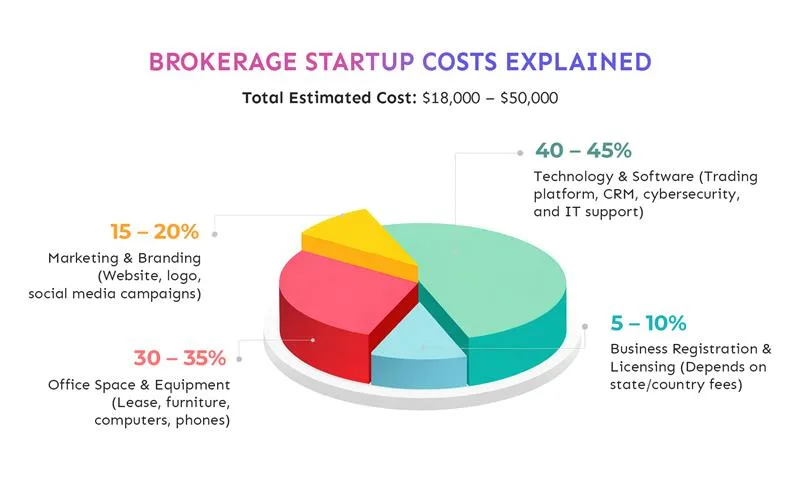
Business Registration and Licensing Fees
All brokerages need to comply with local, federal, state, and national regulations. To do this requires registering the company, getting the proper licenses/permits, and paying any related fees.
These costs vary by state or local jurisdiction and will depend on what kind of brokerage you’re starting.
Estimated Cost Examples:
USA (States)
- California: $2,500 – $10,000
- Texas: $1,500 – $6,000
- New York: $3,000 – $9,000
- Florida: $1,200 – $5,000
UK (Regions/Devolved Nations)
- England: £1,000 – £5,000 ($1,200 – $6,000)
- Scotland: £800 – £4,500 ($1,000 – $5,400)
- Wales: £750 – £4,000 ($900 – $4,800)
- Northern Ireland: £800 – £4,200 ($960 – $5,000)
UAE (Emirates)
- Dubai: AED 15,000 – AED 50,000 ($4,000 – $13,600)
- Abu Dhabi: AED 12,000 – AED 45,000 ($3,300 – $12,300)
- Sharjah: AED 10,000 – AED 35,000 ($2,700 – $9,500)
- Ras Al Khaimah: AED 8,000 – AED 30,000 ($2,200 – $8,200)
These examples show that the costs of starting a brokerage firm vary significantly by jurisdiction, regulatory requirements, and brokerage type.
Technology and Software
A brokerage depends a lot on technology to handle trading, manage clients, create reports, and keep data safe.
But most of the new brokerages don’t have their own tech team to build these systems from scratch. Instead, they depend on outside forex brokerage solution providers.
These providers give software for trading, customer management (CRM), cybersecurity, and reporting. Using these tools is easier and safer than trying to build your own system, but it comes with costs like subscriptions, licenses, and support fees.
These cost $10,000 to $50,000+, depending on the number of users and how advanced the system is. This can include:
- Trading Platform: To handle all buying and selling activities.
- CRM System: To manage client information and communication.
- Cybersecurity Tools: To protect sensitive data from hackers and breaches.
- Other Tools: Reporting, backups, and IT support services.
Overall, while registration and licensing costs range from $1,000–$10,000, depending on the country, the real expense comes from technology and ongoing systems, bringing the total startup cost to roughly $20,000–$100,000 or more for a basic brokerage setup, and significantly higher as the business grows.
Different Types of Brokerage Firms and Their Startup Costs
Different types of brokerage firms come with varying startup costs, mainly due to differences in regulation, technology requirements, and operational complexity. Understanding these cost variations helps you choose the right brokerage model based on your budget and business goals.
💡 Key Takeaway
- Forex brokerage: Low cost, fast launch
- Stock brokerage: High cost, heavy regulation
- Crypto brokerage: Moderate cost, tech-driven
Forex Brokerage
A forex brokerage is generally the most cost-effective option to start, especially when using a white-label solution. This model allows you to leverage an existing trading platform without building one from scratch.
- Lower initial investment compared to other brokerage types
- Requires integration with liquidity providers
- Includes trading platforms like MT4/MT5 or similar
- Faster time to market
Forex brokerages are ideal for startups looking to enter the financial market with limited capital and a quicker setup time.
Stock Brokerage
A stock brokerage firm involves higher startup costs due to strict regulatory frameworks and exchange requirements.
- Requires licenses from financial authorities
- Mandatory exchange memberships (e.g., stock exchanges)
- Higher compliance and legal costs
- Advanced infrastructure for order execution
Because of these factors, stock brokerages are best suited for businesses with strong financial backing and long-term investment plans.
Crypto Brokerage
A crypto brokerage falls in the mid-range cost category but can vary depending on the level of security and customization.
- Requires secure wallet integration and custody solutions
- Blockchain infrastructure and security protocols are essential
- Regulatory requirements vary widely by country
- Moderate development and operational costs
Crypto brokerages are a good choice for entrepreneurs aiming to tap into the rapidly growing digital asset market, but they must prioritize security and compliance.
Brokerage Firm Setup Cost by Budget (Low, Mid & High Investment)
The investment required to launch a brokerage firm varies based on business objectives, operational scope, and customization needs. Generally, brokerage models are categorized into three levels: entry-level, mid-range, and enterprise-grade setups.
Low Budget Brokerage Setup
A low-investment setup is best suited for startups that want to enter the market quickly with minimal capital. It typically relies on a white-label solution, allowing you to operate using an existing trading infrastructure.
Estimated Cost: $20,000 – $50,000
- Quick deployment and market entry
- Minimal customization capabilities
- Simplified technical and operational requirements
This option is ideal for entrepreneurs who want to validate their business idea without heavy financial exposure.
Mid-Level Brokerage Setup
A mid-range brokerage model offers a balance between affordability and control. It provides more flexibility in branding, feature integration, and system customization.
Estimated Cost: $50,000 – $150,000
- Enhanced control over platform functionality
- Improved branding and user experience
- Moderate development effort and setup time
This structure suits businesses aiming for steady expansion with controlled investment.
High Budget (Enterprise) Brokerage Setup
An enterprise-level brokerage involves building a fully customized trading ecosystem with complete operational independence.
Estimated Cost: $150,000 – $500,000+
- Full ownership of the trading infrastructure
- Extensive customization and scalability options
- Higher compliance, development, and maintenance requirements
This model is designed for established investors or firms targeting large-scale market presence and long-term dominance.
How Various Factors Affect the Cost of Building a Brokerage Firm?
Several factors influence the cost of building a brokerage firm, including regulatory compliance, technology infrastructure, business model decisions, and strategies for acquiring clients, all of which affect both the initial investment and ongoing expenses. Let’s take a closer look at each of these factors.
Licenses and Legal Requirements
This is usually the highest cost. You need approval from financial regulators (like government authorities). Getting these licenses is expensive and often requires you to keep a large amount of money as a security deposit.
Business Model (How you set it up)
White-label model: You use an existing company’s platform.
- Affordable ($5,000–$20,000) and quicker to start
- Less control over features
Independent brokerage: You build everything yourself
- Much more expensive
- Full control over your business
Technology Setup
You need systems for trading, managing orders, and handling data in real time. These platforms are complex and can cost a lot to build and maintain.
Liquidity & Service Providers
You must connect with banks or large financial institutions so your clients can buy and sell assets. These connections come with fees.
Operational Costs
This includes:
- Hiring skilled employees
- Legal and registration costs
- Office setup and tools
This can range from about $10,000 to over $100,000, depending on your scale.
Marketing and Getting Clients
Since many brokerage firms already exist, you’ll need to spend money on advertising and promotions to attract customers.
Cost-Effective Strategies for Launching a Brokerage Firm
Starting a brokerage firm can be expensive, but there are strategies to manage costs effectively depending on how you choose to set up your business. The two main approaches are building from scratch or using white-label solutions.
1. Building from Scratch
Creating a Forex brokerage platform from the beginning gives you complete control over features, design, and compliance. While this approach allows for full customization and long-term scalability, it comes with higher upfront costs. To reduce expenses:
- Start with a minimal viable platform and gradually add features.
- Use open-source tools and frameworks where possible.
- Outsource non-core tasks like UI/UX design or testing to reduce staffing costs.
2. White-Label Solutions
A white-label solution is a ready-made platform provided by a third-party company. This approach is faster and much more affordable, often costing between $5,000 and $20,000 to launch. The trade-off is limited control over platform features and branding. Cost-effective strategies here include:
- Choosing a white-label provider that allows customization where it matters.
- Negotiating subscription or licensing fees instead of paying high upfront costs.
- Using the saved capital to invest in marketing and client acquisition, which is crucial for early growth.
By carefully selecting the setup approach and applying cost-saving measures, entrepreneurs can launch a brokerage firm that balances budget, control, and long-term growth potential.
Is Starting a Brokerage Firm Profitable?
Yes, starting a brokerage firm can be profitable due to recurring income from commissions, spreads, advisory fees, and margin interest. Once a strong client base is established, the business can generate stable revenue.
However, profitability is not immediate. It depends on high trading volume, efficient operations, and regulatory compliance. Most firms take time to reach consistent earnings due to high setup and operational costs.
Industry research from McKinsey & Company suggests that brokerage profitability is strongly driven by technology efficiency and client trading activity.
Costly Mistakes to Avoid When Starting a Brokerage
Even with a strong idea, mistakes in platform development can quickly inflate costs or delay your launch. Here are the most common pitfalls to watch out for:
1. Choosing the Wrong Technology Approach
- Going fully custom without assessing the budget and timeline can be extremely expensive.
- On the other hand, picking a white-label solution without verifying customization options can limit growth later.
2. Ignoring Scalability
- Building a platform that can’t handle growing users or high trading volumes can cause expensive rewrites.
- Plan architecture for future upgrades from the start.
3. Overlooking Security and Compliance Features
- Skipping proper encryption, KYC/AML modules, or audit logs can lead to regulatory issues and costly fines.
- Always include compliance features in the development roadmap.
4. Underestimating Integration Complexity
- Connecting to liquidity providers, market data feeds, and payment gateways can be more complicated than expected.
- Poor integration leads to slow execution, errors, or downtime—costly both financially and reputationally.
5. Trying to Launch with Too Many Features
- Feature overload increases development time and costs.
- Focus on a minimal viable product (MVP) first, then scale with additional features.
6. Neglecting Maintenance and Support
- A brokerage platform requires continuous updates, bug fixes, and monitoring.
- Not budgeting for ongoing support can result in downtime and unhappy clients.
By avoiding these mistakes, you can save significant development costs, ensure an easy launch, and build a platform that grows with your brokerage business.
Why Entrepreneurs Trust Hashcodex for Brokerage Platforms?
Entrepreneurs trust Hashcodex due to our offering, which combines deep experience in advanced financial technologies with practical solutions. Whether it’s an entirely custom solution or a white-label one, we enable businesses to launch quickly while still holding firm to their brand attributes and values.
We combine powerful trading platforms, live data solutions, and due diligence-compliant features into one complete system. The result is a consistent and trustworthy trading platform from the very first time a trader utilizes it. With good connectivity to liquidity providers, flexible modular architecture for developing new features, and ultimately, continued support to brokerages, we provide the tools that empower brokerages to grow their business with confidence.
However, Hashcodex is more than a technology provider; we are specialized in creating high-performing, growing, and ultimately successful brokerage solutions for our clients.
FAQs
What are the main expenses when starting a brokerage?
The key costs usually include licensing and regulatory fees, technology and platform development, liquidity provider integrations, operational setup (staff, office, legal), and marketing to attract clients.
How can I save costs without compromising quality?
Options include using white-label solutions initially, outsourcing non-core development tasks, prioritizing MVP features first, and choosing a modular, scalable architecture to reduce future redevelopment.
How much does white-label brokerage software cost?
White-label brokerage software can start from approximately $5,000–$20,000 for some setups, but the actual cost depends on the provider, trading platform, integrations, customization, licensing, and ongoing fees. This estimate should be treated as a technology/setup range rather than the total cost of establishing a regulated brokerage.
How long does it take to launch a brokerage?
The timeline varies according to jurisdiction, licensing requirements, technology approach, integrations, compliance preparation, and operational readiness. Using third-party infrastructure may reduce technology development time, but it does not eliminate regulatory or operational requirements.
What technology does a brokerage firm need?
A modern brokerage typically requires a trading platform, client portal, CRM, liquidity provider integration, market-data feeds, payment infrastructure, KYC/AML tools, risk-management systems, reporting, security controls, and an administrative dashboard.
Can I start a brokerage with a limited budget?
Yes, depending on the business model and jurisdiction. Startups can reduce initial technology costs by using a white-label solution, launching an MVP, prioritizing essential features, and using modular infrastructure. However, regulatory, capital, compliance, and operational requirements still need to be considered separately.
What are the ongoing costs of running a brokerage?
Ongoing expenses can include software licensing, hosting, liquidity and market-data services, compliance, legal support, employee salaries, customer support, cybersecurity, maintenance, upgrades, and marketing. These costs can increase as the number of users and trading volume grows.










 NDA on Request
 Free Consultation – Let’s discuss your ideas