
You start with a simple idea:
“Let’s build a decentralized exchange.”
At first, it sounds easy.
You imagine a simple UI, tokens, and people trading on your platform.
Then reality appears.
Smart contracts, liquidity pools, security, and cross-chain systems all demand different technical expertise.
Suddenly, you realize:
“We may need a strong Decentralized exchange development team for this.”
This is where many founders get stuck. Not because the idea is bad, but because building a DEX is more complex than expected.
So the big question becomes:
Who should build this DEX?
A DEX development company is not just a group of coders.
It is a team that helps design, build, secure, and launch your exchange.
Choosing the right partner can decide your project’s success.
Let’s explore why selecting the right DEX development partner matters.
What Is a Decentralized Exchange (DEX)?
A decentralized exchange, or DEX, is a crypto trading platform that lets users trade digital assets directly from their wallets.
There is no central authority holding funds or controlling transactions, as everything runs through blockchain-based smart contracts.
This gives users direct control over their assets without third-party custody. It also enables open, global trading without traditional account systems.
Platforms like Uniswap and PancakeSwap show how widely this model is used today. Millions of transactions now occur daily through decentralized trading applications, especially within DeFi ecosystems.
These platforms continue to evolve as more blockchain networks support advanced trading systems.
Decentralized Exchange Development
Decentralized exchange development is the process of building a crypto trading platform where users can buy, sell, and swap digital assets directly from their wallets.
These platforms work using blockchain technology and smart contracts.
Users do not need to create traditional trading accounts.
Instead, they connect wallets like MetaMask or Trust Wallet to access the platform.
A decentralized exchange platform can include:
- Token swapping
- Liquidity pools
- Staking systems
- Yield farming
- Wallet integration
- Cross-chain trading
DEX development also includes:
- Frontend development
- Smart contract coding
- Blockchain integration
- Admin dashboard setup
- Security testing
Today, many startups and enterprises build decentralized exchanges to enter the growing DeFi market.
These platforms are used for crypto trading, token ecosystems, community governance, and blockchain-based financial services.
DEX platforms continue to grow as more users prefer wallet-based crypto transactions and on-chain trading systems.
Decentralized Exchange Development Company for Crypto Startups
Hashcodex is a crypto exchange development company that builds decentralized exchange platforms for startups, enterprises, and Web3 businesses. These platforms allow users to trade cryptocurrencies directly from their wallets, while smart contracts handle trade execution and record transactions on the blockchain.
We provide development services that help businesses launch their own crypto exchange platforms, including decentralized trading systems. Our team works with modern blockchain tools and AI-based development methods to support planning, testing, and platform improvements. Whether the goal is to build a new exchange or update an existing one, we offer technical support across the development process.
Types of Decentralized Exchange Services We Offer
At Hashcodex, we provide decentralized exchange development services for startups, enterprises, and Web3 businesses. Our solutions are designed to support secure crypto trading, multi-chain functionality, and advanced DeFi features.
We build custom DEX platforms based on different business models, trading requirements, and blockchain ecosystems. Each solution focuses on performance, security, and user-friendly trading experiences.
AMM-Based DEX Development
We develop AMM (Automated Market Maker) decentralized exchanges that use liquidity pools instead of traditional order matching systems. These platforms allow users to swap tokens directly through smart contracts.
Our AMM DEX solutions include:
- Liquidity pool integration
- Automated token swaps
- Yield farming features
- Staking systems
- Multi-token support
AMM-based exchanges are suitable for DeFi startups, community token ecosystems, and blockchain projects launching crypto trading platforms.
Order Book DEX Development
We provide order book DEX development services for businesses that require advanced trading functionality. These platforms support detailed market analysis and different order types.
Our order book DEX services include:
- Market and limit orders
- Advanced trading dashboards
- Real-time trading analytics
- Matching engine integration
- Liquidity management systems
Order book decentralized exchanges are commonly used for large crypto trading platforms and professional trading environments.
Hybrid DEX Development
Our hybrid DEX development services combine blockchain-based asset ownership with high-performance trading infrastructure. These platforms focus on improving transaction speed and trading experience.
Hybrid DEX platforms include:
- Faster transaction processing
- Better platform performance
- Advanced liquidity systems
- Improved trading interface
- User-friendly accessibility
This model is becoming increasingly popular among businesses building modern Web3 trading platforms.
Cross-Chain DEX Development
We build cross-chain decentralized exchanges that support crypto asset trading across multiple blockchain networks. These platforms help users access different blockchain ecosystems from a single trading platform.
Our cross-chain DEX solutions include:
- Multi-chain asset transfers
- Cross-chain liquidity integration
- Blockchain bridge integration
- Interoperable smart contracts
- Multi-network wallet support
Cross-chain functionality helps businesses support larger DeFi audiences and multiple blockchain networks.
White Label DEX Development
We provide white label decentralized exchange solutions for businesses looking to launch crypto trading platforms quickly. These ready-made solutions help reduce development time and simplify deployment.
Our white label DEX services include:
- Custom branding
- Wallet integration
- Liquidity management
- Security implementation
- Trading infrastructure setup
White label platforms are suitable for startups and enterprises looking for faster product launches with customizable trading features.
Multi-Chain DEX Development
Our multi-chain DEX development services help businesses build trading platforms that support multiple blockchain ecosystems. This allows users to trade assets across different blockchain networks.
Multi-chain DEX platforms include:
- Support for multiple blockchain networks
- Lower transaction costs
- Multi-chain wallet integration
- Expanded trading access
- Blockchain ecosystem connectivity
These solutions are suitable for businesses targeting larger decentralized finance markets.
Custom DEX Development
We offer custom decentralized exchange development services based on specific business goals and technical requirements. Our team develops platforms with advanced DeFi functionality and secure blockchain architecture.
Our custom DEX development services include:
- Custom UI/UX design
- Smart contract development
- Staking and yield farming modules
- Governance token integration
- Advanced security systems
Custom decentralized exchanges help businesses create unique blockchain platforms with greater flexibility and long-term business potential.

How Does a Decentralized Exchange Work?
A decentralized exchange platform operates using smart contracts and blockchain infrastructure. These technologies automate crypto trading without requiring manual intervention.
Instead of using centralized systems to process trades, the platform automatically executes transactions between users. This decentralized mechanism helps improve transparency and trading efficiency.
Here’s how a typical DEX transaction works:
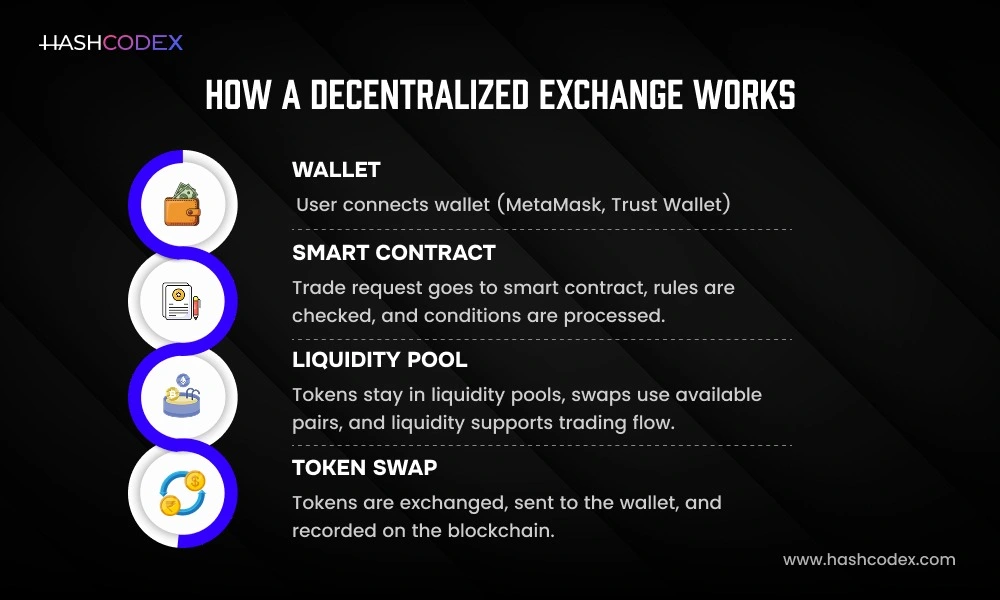
Step 1: Wallet Connection
Users connect crypto wallets such as:
- MetaMask
- Trust Wallet
- Coinbase Wallet
- WalletConnect
No account registration is required. This simplifies onboarding and allows users to start trading instantly.
Step 2: Token Selection
Users choose the token pair they want to swap.
Examples:
- ETH to USDT
- BNB to CAKE
- MATIC to USDC
Most modern DEX platforms also provide real-time token pricing and slippage estimates before trade confirmation.
Step 3: Smart Contract Execution
The smart contract checks:
- Liquidity availability
- Token price
- Trading fees
Once confirmed, the trade executes automatically. This process eliminates the need for manual order processing and improves transaction reliability.
Step 4: Transaction Confirmation
The blockchain validates the transaction and transfers assets directly to the user’s wallet. Every transaction is recorded transparently on the blockchain network.
This process removes third-party custody from crypto trading. It also improves user trust by ensuring full ownership of digital assets.
Advanced DEX Development Solutions We Offer
Along with core decentralized exchange development services, we also provide advanced DEX solutions that help businesses expand their trading capabilities and support modern DeFi requirements.
Cross-Chain DEX Solutions
We develop cross-chain trading solutions that allow users to trade cryptocurrencies across multiple blockchain networks through a single platform.
DEX Aggregator Integration
Our DEX aggregator solutions collect token prices and liquidity data from multiple decentralized exchanges to provide better trading options for users.
Staking and Yield Farming Integration
We integrate staking and yield farming modules that allow users to lock digital assets and participate in reward-based DeFi activities.
DAO Governance Systems
Our DAO governance solutions help businesses introduce community voting systems where token holders can participate in platform decisions.
Liquidity Pool Integration
We provide liquidity pool integration services that support token swapping and improve trading activity across decentralized exchanges.
Smart Contract Development
Our team develops smart contracts for token swaps, staking, governance, liquidity management, and other DeFi-related functionalities.
Wallet Integration Solutions
We integrate popular crypto wallets that allow users to connect their accounts and manage digital assets directly from the platform.
Perpetual Exchange Development
We provide perpetual exchange development for businesses planning to launch decentralized derivatives trading platforms with leveraged trading functionality and advanced trading features.
Important Features of Our Decentralized Exchange Platform
A successful decentralized exchange requires more than basic token swaps. Modern users expect secure, fast, and feature-rich trading experiences.
Advanced functionality plays an important role in user retention and platform growth. Businesses must prioritize both performance and usability during DEX development.
Wallet Integration
Wallet connectivity is the foundation of decentralized trading.
A DEX platform should support:
- MetaMask
- WalletConnect
- Coinbase Wallet
- Trust Wallet
Easy wallet integration improves onboarding and simplifies the overall trading experience.
Token Swapping
Fast token swapping is one of the most essential DEX features.
Users expect:
- Low slippage
- Faster execution
- Real-time pricing
Efficient swap functionality helps improve user satisfaction and trading activity.
Liquidity Pool Integration
Liquidity pools maintain active trading markets and support smooth transaction execution.
Without sufficient liquidity, users may experience:
- Delayed trades
- High slippage
- Poor trading experience
Strong liquidity management is important for long-term platform stability.
Cross-Chain Trading
Cross-chain functionality enables users to trade assets across multiple blockchain ecosystems. This improves accessibility and expands trading opportunities.
It also allows businesses to support larger DeFi communities and multi-chain ecosystems.
Staking and Yield Farming
Staking features encourage users to lock assets and earn rewards directly from the platform. These features improve user engagement and platform activity.
Yield farming mechanisms can also help attract liquidity providers and long-term token holders.
Real-Time Analytics
Modern DEX platforms often include:
- Trading charts
- Token analytics
- Portfolio tracking
- Market insights
These tools help users make better trading decisions and improve platform usability.
Mobile Compatibility
Many users access DeFi platforms through smartphones and tablets. A responsive interface improves accessibility across multiple devices.
Mobile optimization also increases engagement among global crypto users.
Security Infrastructure
Security remains one of the highest priorities in decentralized exchange software development.
Platforms usually implement:
- Smart contract audits
- Multi-signature wallets
- Anti-bot systems
- DDoS protection
- Transaction monitoring
A strong security infrastructure helps reduce vulnerabilities and improve user trust.
Our Decentralized Exchange Development Process
Building a decentralized exchange platform requires proper planning and blockchain expertise. A well-organized development process helps reduce technical issues and improve overall platform performance.
Every stage of development plays an important role in platform functionality, trading experience, and long-term business growth. Businesses should focus on both technical development and user-friendly design throughout the process.
1. Requirement Analysis
The development team identifies:
- Business goals
- Trading features
- Blockchain requirements
- User expectations
This stage helps create a clear roadmap for platform development and future feature planning.
2. UI/UX Design
User experience directly affects platform engagement and retention.
A clean trading dashboard improves:
- Navigation
- Wallet connectivity
- Trading accessibility
Well-designed interfaces also make onboarding easier for new crypto users.
3. Smart Contract Development
Smart contracts handle:
- Token swaps
- Liquidity pools
- Trading execution
- Reward systems
Proper smart contract logic is important for reliable platform operations and transaction handling.
4. Blockchain Integration
This stage connects:
- Wallet systems
- Blockchain nodes
- APIs
- Trading engines
Blockchain integration supports transaction processing and communication between platform components.
5. Security Testing
Security audits help identify vulnerabilities before platform launch.
Testing usually includes:
- Smart contract auditing
- Penetration testing
- Transaction validation
Detailed testing helps reduce operational risks and technical issues.
6. Deployment
Once testing is complete, the DEX platform is deployed to the blockchain network. Deployment includes final configuration and live environment setup.
Proper launch planning helps maintain stable platform performance during the initial growth phase.
7. Maintenance and Updates
Regular maintenance helps improve:
- Platform performance
- System monitoring
- Feature updates
- User experience
Continuous updates help platforms adapt to new blockchain technologies and changing user requirements.
Best Blockchain Networks for DEX Development
Blockchain selection directly affects:
- Trading speed
- Gas fees
- Scalability
- Security
- Liquidity access
Choosing the right blockchain network is essential for platform performance and user experience. Different blockchain ecosystems offer unique advantages depending on business requirements.
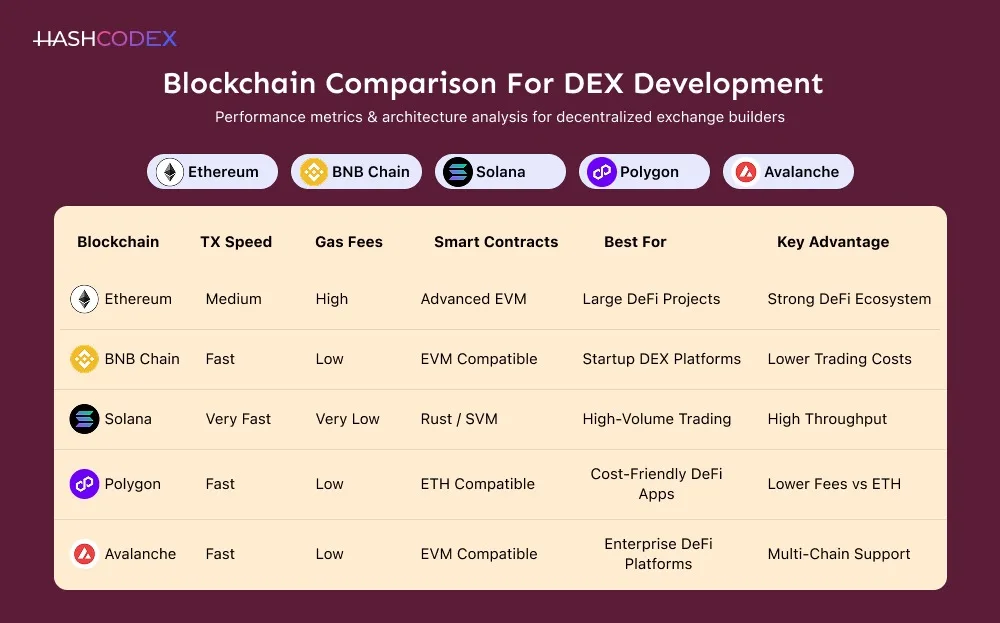
Ethereum
Ethereum remains one of the largest DeFi ecosystems in the blockchain industry. It provides extensive developer tools and strong smart contract capabilities.
Best For
- Large liquidity markets
- Established DeFi ecosystems
- Advanced smart contracts
Challenge
Higher gas fees during network congestion. Despite this, Ethereum continues to dominate decentralized finance adoption.
BNB Chain
BNB Chain is widely used for low-cost DeFi applications and scalable blockchain projects. It is popular among startups because of its affordable transaction fees.
Best For
- Faster transactions
- Startup-friendly projects
- Lower trading fees
Its growing ecosystem makes it a preferred choice for many new DEX platforms.
Solana
Solana is known for high transaction speed and scalability. Its architecture supports large trading volumes with minimal network delays.
Best For
- High-frequency trading
- Large transaction volumes
- Scalable DeFi applications
Solana is increasingly used for advanced DeFi and NFT-based ecosystems.
Polygon
Polygon provides Ethereum compatibility with significantly lower transaction fees. It is commonly used for scalable Web3 applications.
Best For
- Scalable DeFi apps
- Cost-efficient transactions
- Multi-chain integration
Polygon also supports faster transaction processing for growing blockchain platforms.
Avalanche
Avalanche supports fast and low-cost decentralized applications with strong scalability features. It is designed for enterprise-level blockchain environments.
Best For
- Enterprise blockchain projects
- Cross-chain applications
- Scalable crypto platforms
Its subnet architecture also provides flexibility for custom blockchain ecosystems.
Common Challenges in Decentralized Exchange Development
Building a decentralized exchange platform involves both technical and operational challenges. Understanding these issues helps businesses prepare better development strategies and long-term solutions.
As DeFi adoption continues to grow, platform performance, transaction handling, and system reliability become more important. Businesses should address these challenges early during the development
Liquidity Problems
Low liquidity can reduce trading activity and negatively affect user trust. Inactive trading markets may also reduce user participation and overall platform growth.
Many startups address this challenge through:
- Liquidity mining
- Token incentive programs
- Partnership integrations
Proper liquidity planning helps maintain active trading markets and improve user activity.
Smart Contract Vulnerabilities
Even small coding mistakes can create major technical issues. Vulnerabilities may result in financial losses, transaction problems, and platform downtime.
Regular smart contract audits help identify coding issues before platform launch. Continuous monitoring and testing also help maintain platform reliability.
Blockchain Network Limitations
Network congestion can slow transactions and increase gas fees, especially during periods of high trading activity. This can affect the overall user trading experience.
Many businesses address this challenge through:
- Layer-2 integrations
- Multi-chain support
- Transaction optimization methods
These approaches help improve transaction handling across blockchain networks.
Cross-Chain Complexity
Supporting multiple blockchain networks increases development complexity. Cross-chain bridges and asset transfers require additional validation systems and technical planning.
Proper architecture design helps reduce interoperability issues and transaction-related errors between blockchain ecosystems.
Regulatory Uncertainty
Crypto regulations continue evolving across different countries and jurisdictions. Legal requirements may vary depending on business location and platform operations.
Businesses should regularly monitor regulatory updates before launching blockchain trading platforms or expanding into new markets.
How Decentralized Exchanges Make Money
Many startup founders want to understand how DEX platforms generate revenue. A strong monetization strategy is essential for long-term business sustainability.
Modern DEX platforms often combine multiple revenue models to maximize profitability. Diversified income streams can also help support platform expansion.
Trading Fees
Small transaction fees are collected from token swaps and trades. This is the primary revenue source for most decentralized exchanges.
Higher trading volume directly increases platform revenue generation.
Token Listing Fees
Blockchain projects may pay listing fees to add tokens to the exchange. This creates an additional income source for platform operators.
Listing services can also help expand ecosystem partnerships and token visibility.
Staking Revenue
Platforms can generate revenue through staking participation and validator rewards. These systems encourage long-term platform engagement.
Staking mechanisms also help improve liquidity and ecosystem activity.
Premium Features
Advanced trading tools, analytics, and automation services can be offered through premium subscriptions. These features are especially attractive to active traders.
Premium services help platforms create recurring revenue opportunities.
Launchpad Services
Some DEX platforms provide token launch services for blockchain startups. These launchpad systems support fundraising and token distribution.
Launchpad integration can significantly expand business opportunities within the Web3 ecosystem.
Cost of Decentralized Exchange Development
The cost of decentralized exchange development depends on several technical and business factors. Platform complexity directly impacts overall development expenses.
Businesses should carefully evaluate feature requirements and scalability goals before planning their development budget. Long-term maintenance and security costs should also be considered.
Main pricing factors include:
- Blockchain selection
- Feature complexity
- Multi-chain support
- Smart contract development
- Security infrastructure
- UI/UX requirements
Estimated Development Costs
| DEX Solution Type | Estimated Cost |
| Basic DEX Development | $8,000 – $15,000 |
| Multi-Chain DEX | $20,000 – $40,000 |
| Advanced DeFi Trading Platform | $50,000+ |
Enterprise-grade DEX platforms with advanced trading functionality may require significantly larger budgets and longer development timelines.
Security Best Practices for DEX Platforms
Security directly affects platform credibility and long-term user trust. Even minor vulnerabilities can create major operational risks.
Modern decentralized exchanges should implement advanced protection mechanisms throughout the platform infrastructure. Continuous monitoring is also important for maintaining security standards.
Recommended security practices include:
- Smart contract audits
- Multi-signature wallets
- Cold wallet support
- Anti-phishing systems
- DDoS protection
- Real-time monitoring
- Access control systems
Strong security infrastructure helps reduce risks and improve platform reliability. Businesses that prioritize security often achieve better user retention and ecosystem growth
Build a DEX Around a Trading Thesis
The strongest DEX projects begin with a thesis, not a feature list.
Maybe the thesis is:
“Professional traders need better on-chain execution.”
Or:
“Cross-chain trading should feel like trading on one network.”
Or:
“Long-tail assets need deeper and more efficient liquidity.”
Or:
“DeFi needs a simpler trading experience for mainstream users.”
That thesis becomes the filter for every product and technical decision.
If a feature strengthens the thesis, build it.
If it doesn't, reconsider it.
This approach produces a DEX with an identity instead of another exchange that looks like every other exchange.
Choosing the Right Decentralized Exchange Development Company
Selecting the right development partner is important for building a high-performance DEX platform. Experienced blockchain developers can help businesses handle technical challenges during the development process.
Businesses should evaluate technical knowledge, development experience, and post-launch support before choosing a DEX development company. The right partner can also help reduce development delays and improve overall project management.
Important evaluation factors include:
- Blockchain expertise
- DeFi development experience
- Smart contract development knowledge
- Smart contract portfolio
- Cross-chain integration experience
- Post-launch support
Businesses should also review previous blockchain projects and technical capabilities before making a final decision. A well-planned development approach helps improve platform quality and long-term business growth.
Why Businesses Choose Hashcodex for DEX Development?
Hashcodex has a skilled team of developers who provide decentralized exchange development solutions for startups, enterprises, and Web3 businesses. Our team focuses on building DeFi platforms that support modern crypto trading needs and business goals.
Our services include:
- Custom DEX development
- White label DEX software
- Smart contract development
- Cross-chain integration
- Wallet integration
- Liquidity pool integration
- Staking and yield farming modules
We focus on developing user-friendly decentralized trading platforms with advanced blockchain functionality and modern trading features. Our development approach also focuses on platform performance, smart contract functionality, and long-term platform growth.
Planning to launch a modern decentralized exchange platform? Hashcodex provides the expertise to make it happen.
Frequently Asked Questions
How long does it take to launch a DEX platform?
A simple DEX can take a few weeks to build, while more advanced versions take longer due to development, testing, and setup work. The timeline also depends on feature complexity and integrations.
Which blockchain is best for building a DEX platform?
Ethereum, BNB Chain, Solana, Polygon, and Avalanche are commonly used options. The choice depends on transaction cost, speed, and project goals.
Why should businesses invest in DEX development?
Businesses invest in DEX platforms to build trading systems, launch tokens, and create DeFi-based services. It also helps them enter the growing Web3 ecosystem.
What features should a new DEX platform include?
A new DEX should include wallet connection, token swapping, liquidity pools, trading charts, and basic analytics. Extra features like staking and rewards can be added later.
Can startups build their own decentralized exchange?
Yes, startups can launch their own DEX with the right development team and planning. Many start with basic features first and then add more functions over time.
Do DEX platforms need liquidity to run properly?
Yes, liquidity is important for smooth token trading. Without enough liquidity, users may face delays or difficulty completing trades.










 NDA on Request
 Free Consultation – Let’s discuss your ideas