
Let's say it's time to choose a prop firm technology provider.
You start looking at different platforms, compare a few demos, and check their features. But after a while, they all begin to look the same.
Now you're left with one question.
What should I actually be looking at while evaluating these providers, and how do I choose a prop firm technology provider that fits my business?
That's exactly what this guide will answer.
We've put together a practical 20-point checklist that covers how to evaluate a prop trading software provider and the important things you should consider before choosing one.
Why Choosing the Right Prop Firm Technology Provider Matters?
A prop firm depends on technology for almost everything, from trader onboarding and challenge management to account monitoring and daily operations.
If the platform isn't the right fit, running your business can become much more difficult over time.
Some common challenges include:
- Too much manual work for your team
- Limited features as your firm grows
- Problems connecting with the tools you already use
- Delays in managing traders and accounts
- Slow or unhelpful support when issues come up
That's why choosing the right technology provider from the beginning is important. A little extra time spent evaluating your options now can save you a lot of time and effort later.
20 Point Checklist for Evaluating a Prop Firm Technology Provider
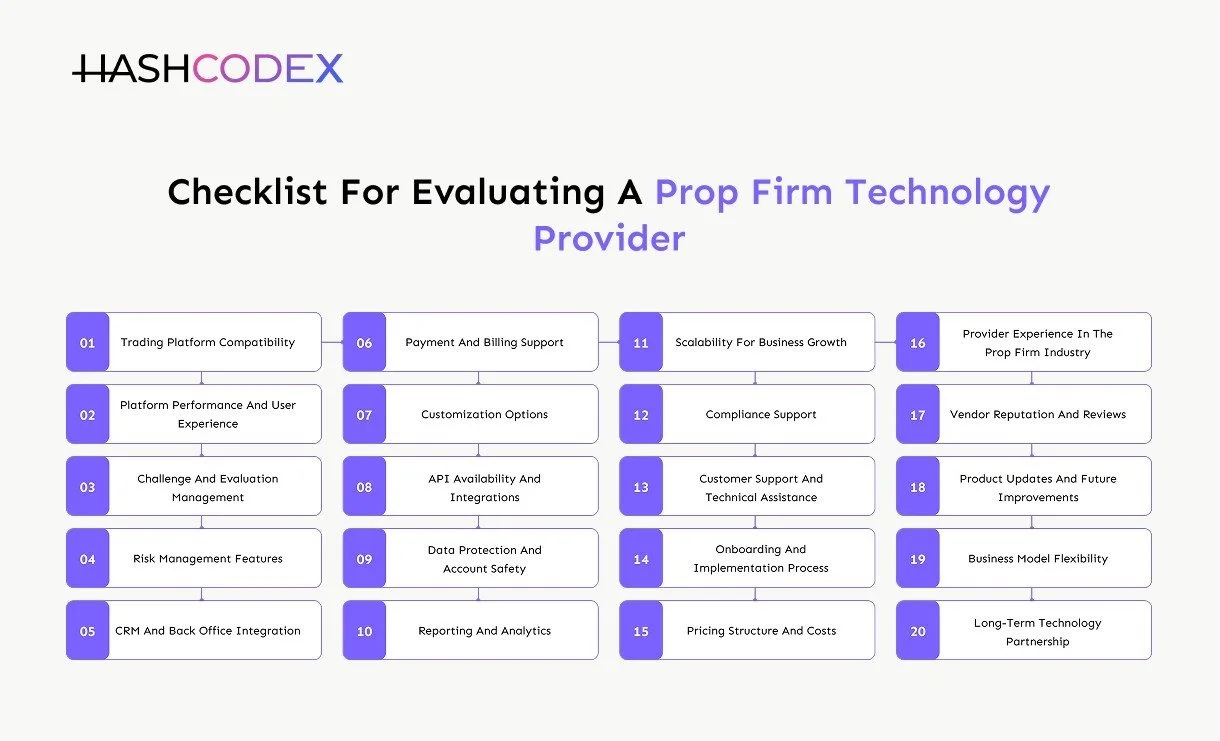
Now comes the important part.
When comparing prop firm technology providers, look at each area carefully instead of choosing based on first impressions.
To make this easier, we have created a practical prop firm technology checklist covering the important points you should review before choosing a provider.
Trading Platform Compatibility
Start by checking if the provider supports the trading platforms you want to use.
Whether it is MT4, MT5, cTrader, or others, make sure they connect properly and support your account types and challenge rules.
The right platform support gives you more flexibility.
Platform Performance and User Experience
Your traders and team will use the platform regularly, so it should be simple and easy to navigate.
While evaluating, pay attention to:
- Dashboard experience
- Account management
- Navigation
- Mobile access
A better user experience makes daily tasks easier.
Challenge and Evaluation Management
Challenges are the core of most prop firms.
Your provider should allow you to create and manage evaluation programs based on your business model instead of limiting you to fixed options.
Make sure you can set things like profit targets, drawdown rules, trading conditions, and different challenge stages.
Risk Management Features
Your technology should help you monitor trader activity and make sure accounts follow your rules.
Important areas to review include:
- Account monitoring
- Rule violation alerts
- Risk limits
- Performance tracking
Ask the provider how their system helps your team manage risk on a daily basis.
CRM and Back Office Integration
Your team also needs to handle traders, communication, reports, and other daily tasks. This is why your technology should work well with your existing tools.
Check whether the provider supports CRM connections, user management, reporting, and other back-office requirements.
Having connected systems makes it easier to manage your operations.
Payment and Billing Support
From collecting challenge fees to handling refunds, your payment process should work well for both your team and traders.
Before choosing a provider, understand how they handle payment gateways, transactions, subscriptions, and different payment options.
A clear payment process helps avoid problems later.
Customization Options
Every prop firm has its own way of operating.
Your provider should give you enough flexibility to make changes based on your requirements.
Ask whether you can customize things like:
- Branding
- Challenge rules
- Account settings
- Workflows
The platform should fit your business, not the other way around.
API Availability and Integrations
As your prop firm grows, you may need to connect your platform with other tools.
Check whether the provider supports third-party integrations, payment systems, reporting tools, and other connections you may need.
Having these options available gives you more flexibility in the future.
Data Protection and Account Safety
Your platform will handle important information about your business and traders.
Before choosing a provider, understand how they manage user data, account access, backups, and system updates.
Knowing how your information is handled helps you make a better decision and avoid issues later.
Reporting and Analytics
Reports help you understand what is happening inside your prop firm.
You should be able to track important information like trader performance, challenge results, account activity, and business reports.
A good reporting system helps your team make better decisions without spending too much time collecting information manually.
Scalability for Business Growth
Your technology needs may change as your prop firm grows.
A platform that works well with a small number of traders may not work the same way when your business expands.
Check whether the provider can support:
- More traders and accounts
- Higher platform usage
- Additional features in the future
Compliance Support
Compliance requirements can vary based on your business model and location.
While your provider may not handle everything, the platform should support proper processes and record-keeping.
Understand how they manage areas like user verification, reports, and important records.
Customer Support and Technical Assistance
Even with the right platform, questions and issues can come up.
Before choosing a provider, understand the level of support they offer.
Consider:
- Response time
- Support channels
- Technical assistance
- Issue handling process
A provider that offers good support can help your team solve problems faster.
Onboarding and Implementation Process
Moving to a new platform should be a clear and organized process.
Before signing with a provider, understand how they handle setup and onboarding.
Ask about:
- Setup timeline
- Training options
- Documentation
- Launch support
A proper onboarding process helps your team get started without confusion.
Pricing Structure and Costs
Price is an important factor, but it should not be the only thing you compare.
Look at the complete pricing structure, including setup costs, monthly fees, extra charges, and feature limits.
Understanding the cost to start a prop firm can also help you plan your budget better before making a decision.
Provider Experience in the Prop Firm Industry
A provider with experience in the prop firm space will better understand your requirements.
Look into their previous projects, industry knowledge, and experience working with similar businesses.
The right experience can make communication easier and help the provider understand your needs better.
Vendor Reputation and Reviews
Before making a final decision, take some time to research the provider.
Customer feedback can give you a better idea of what working with them is actually like.
Look at:
- Client reviews
- Testimonials
- Case studies
- Previous projects
Product Updates and Future Improvements
Technology keeps changing, so it is important to know how the provider improves their platform.
Ask questions like:
Are they adding new features? Do they listen to customer feedback? How often do they release updates?
A provider that keeps improving their platform can better support your future needs.
Business Model Flexibility
Every prop firm has a different approach.
Your provider should be flexible enough to support your challenge structure, account models, and workflows.
Check whether they can handle:
- Different challenge formats
- Multiple account types
- Custom requirements
The platform should support the way you want to run your business.
Long-Term Technology Partnership
Choosing a technology provider is all about choosing a partner for your business.
Consider how well they communicate, support future requests, and understand your goals.
The right provider should be someone you can continue working with as your prop firm grows.
So, these are the key things to consider when choosing prop trading software before making your final decision.
Need help evaluating your prop firm technology requirements?
👉 Talk to our team about your trading platforms, challenge model, CRM, risk management, payment requirements, and needs.
How to Compare and Shortlist Technology Providers?
Once you have reviewed different prop firm technology providers, the next step is to start your prop firm software comparison and create a shortlist.
Instead of choosing a provider based only on pricing or marketing claims, compare them based on what your business actually needs.
While comparing providers, you can:
- Create a simple comparison sheet to review providers side by side.
- Prioritize the features that matter most for your business.
- Remove providers that do not meet your basic requirements.
- Schedule demos to see how the platform works in real situations.
- Check how responsive their support team is.
- Speak with existing customers to understand their experience.
- Compare the complete cost, including setup and ongoing expenses.
A proper comparison process helps you narrow down your options and choose a provider that fits your prop firm better.
Want to know what warning signs to look for before choosing a provider? Read our guide on How to Avoid Scams When Building a Prop Trading Firm.
Conclusion
By now, you should have a much better idea of what to look for when choosing a prop firm technology provider.
Remember, this decision is not just about picking a platform. It is about finding a solution that works well for your business and supports you as your firm continues to grow.
We hope this guide gives you a better idea of where to start and what to consider before making your final choice.
If you are looking for an experienced team to help you build and manage your prop firm technology, Hashcodex can help. With our experience in prop firm solutions, we help businesses create platforms that match their requirements and support their long-term goals.
Frequently Asked Questions(FAQs)
1. What should I ask a prop firm technology provider before signing a contract?
Ask about supported trading platforms, uptime and performance, risk management features, integrations, API access, security, data ownership, backups, customer support, service level agreements, customization, pricing, implementation timelines, and contract terms. You should also request a live demonstration and clarify how the provider handles technical issues, upgrades, migrations, and business growth.
2. Which trading platforms should a prop firm support?
The right trading platforms depend on your target traders and business model. Popular platforms used by prop firms include MetaTrader 4 (MT4), MetaTrader 5 (MT5), cTrader, and other trading technologies. Before choosing a provider, confirm that it supports the platforms you need and can handle the required integrations, account management, and risk controls.
3. What integrations does a prop firm need?
Common integrations include trading platforms, CRM systems, payment gateways, KYC and identity verification services, email and communication tools, analytics platforms, and third party APIs. The specific integrations you need depend on your operational workflow. API availability and integration flexibility matter most if you plan to connect multiple systems or build custom functionality.
4. Can Hashcodex provide custom technology solutions for prop firms?
Yes. Hashcodex can develop technology solutions based on the prop firm’s requirements. Our solutions can be designed around your business workflows, trading platforms, integrations, risk management requirements, and other operational needs.
5. Can Hashcodex help prop firms move away from a white label solution?
Yes. Hashcodex can help prop firms transition from an existing white label technology solution to a more flexible and customizable technology infrastructure. This allows firms to have greater control over their platform, integrations, workflows, and technology as their business grows.











 NDA on Request
 Free Consultation – Let’s discuss your ideas