Are you planning to build an RWA tokenization platform but unsure about the investment required?
You are not alone. Many businesses see the potential in tokenizing real-world assets but struggle to understand how much to spend on development.
The final cost depends on several things, including the type of assets you want to tokenize, platform features, blockchain selection, and customization needs. Without proper planning, these expenses can quickly add up.
In this blog, we will explain the real cost of building an RWA tokenization platform and help you understand where your investment goes.
The Growing Demand for RWA Tokenization Platforms
The demand for RWA tokenization platforms is growing as businesses across industries adopt blockchain to digitize real-world assets and create new investment opportunities. This growing interest is reflected in several industry reports.
Some key statistics that highlight the growing demand for RWA tokenization platforms include:
- Tokenized assets could become a US$16 trillion market by 2030. According to Binance Research, the global market for tokenized real-world assets is projected to reach US$16 trillion by 2030, highlighting the increasing adoption of asset tokenization across multiple industries.
- Boston Consulting Group describes RWA tokenization as the "third revolution in asset management." In its research, BCG states that tokenization is changing how investment products are created, managed, and distributed, with financial institutions increasingly exploring tokenized funds and other blockchain-based financial products.
- The RWA tokenization market is expected to reach US$30 billion by 2025.
Industry reports estimate that the market will grow by 400% in three years, supported by the rising adoption of tokenized private credit and U.S. Treasury bonds. Leading financial institutions, including BlackRock and JPMorgan, are also expanding their tokenization initiatives, reflecting the growing confidence in this market.
These developments show that RWA tokenization is becoming an important part of the financial sector rather than an emerging concept.
As more businesses invest in tokenized assets and digital investment platforms, understanding the cost of building an RWA tokenization platform becomes an important step in planning a successful project.
How Much Does It Cost to Build an RWA Tokenization Platform?
The RWA tokenization platform development cost typically ranges between $20,000 and $250,000+. While the exact investment varies from one project to another, understanding the platform's scope and business requirements is essential for estimating the overall development cost.
The table below provides a general estimate of the development cost based on different platform types.
| Platform Type | Estimated Cost | Ideal For |
| Basic Platform | $20,000 to $50,000 | Startups and businesses looking to launch an MVP with essential tokenization features. |
| Medium Platform | $40,000 to $100,000 | Growing businesses that require additional features. |
| Enterprise Platform | $90,000 to $250,000+ | Large enterprises and financial institutions that require advanced features. |
Basic Platform
A basic RWA tokenization platform typically costs between $20,000 and $50,000. It includes the core features required to tokenize real-world assets and onboard investors, such as user registration, asset listing, token creation, wallet integration, and an admin dashboard.
Medium Platform
A medium-sized RWA tokenization platform generally costs between $40,000 and $100,000. In addition to the core tokenization features, it includes capabilities such as KYC and AML verification, investor dashboards, payment gateway integration, document management, notifications, and reporting.
Enterprise Platform
An enterprise RWA tokenization platform typically costs $90,000 to $250,000 or more, depending on the level of customization and integration required. It includes advanced features such as support for multiple asset types, role-based access, detailed analytics, API integrations, regulatory compliance, multi-language support, and custom workflows.
The estimates above provide a general idea of how much it costs to build an RWA tokenization platform. However, the actual development cost depends on your business requirements, the features you choose, the blockchain network, compliance needs, and the level of customization involved.
Understanding where your budget is allocated can help you plan your investment more accurately, which is what we'll cover in the next section.

Step-by-Step Development Cost Breakdown of an RWA Tokenization Platform
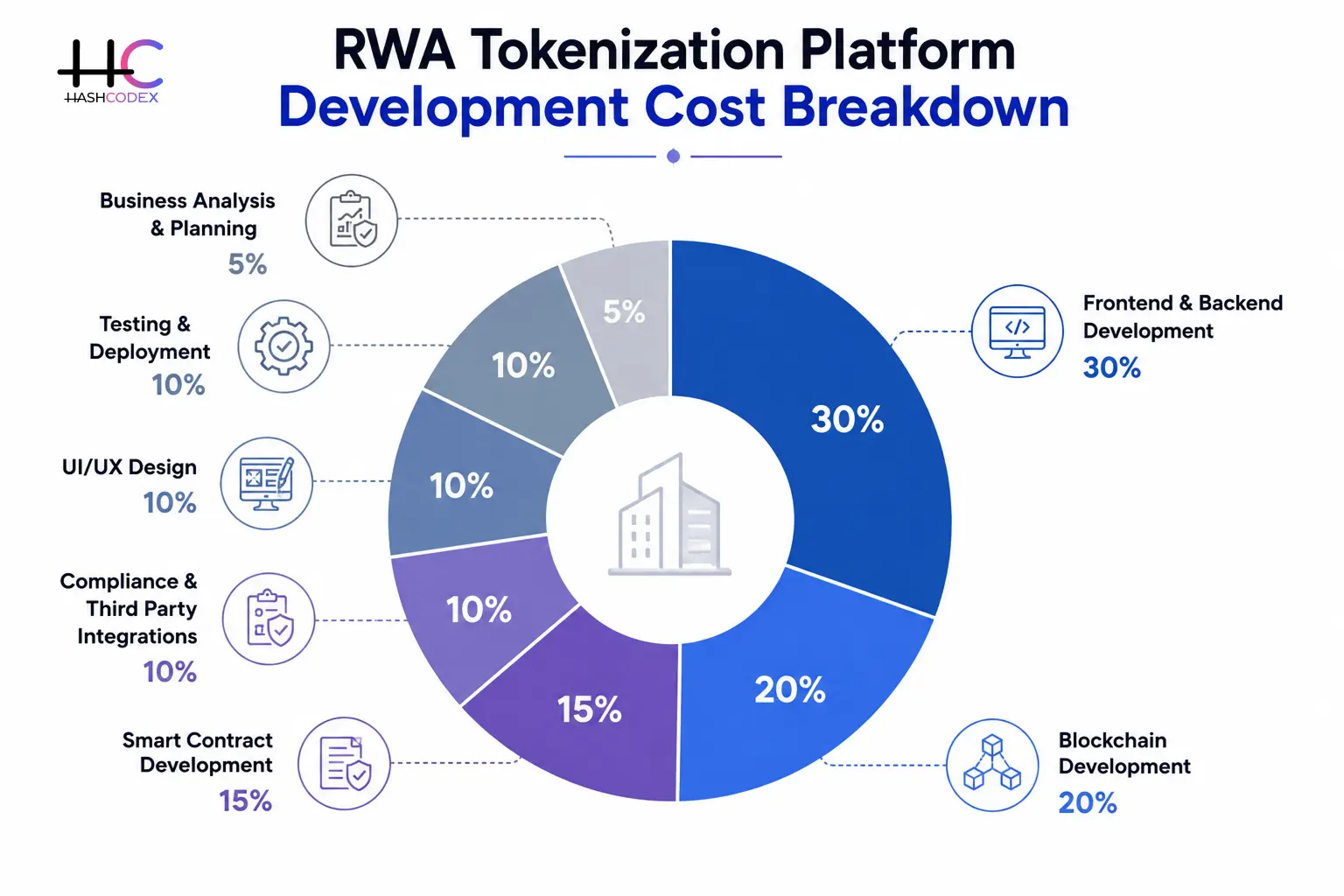
Building an RWA tokenization platform involves multiple development stages, and each stage contributes to the overall project cost. The final investment depends on the platform features, blockchain requirements, compliance needs, integrations, and level of customization.
The major development stages and their estimated costs are:
1. Business Analysis and Planning
This stage focuses on understanding the business model, target users, asset type, and platform requirements. The team defines the project scope and prepares a development roadmap.
Estimated cost: $3,000 to $10,000
2. UI/UX Design
The design stage includes creating the platform structure, user flows, dashboards, asset pages, and interface designs to make the platform easy for users to navigate.
Estimated cost: $5,000 to $15,000
3. Blockchain Development
This stage involves selecting the suitable blockchain network, setting up blockchain architecture, and integrating blockchain functionalities required for the platform.
Estimated cost: $10,000 to $50,000
4. Smart Contract Development
Smart contract development covers the creation of contracts required for asset tokenization, ownership management, token transfers, and transaction rules.
Estimated cost: $10,000 to $40,000
5. Compliance and Third-Party Integrations
This stage focuses on adding important compliance features and connecting external services required for platform operations. It may include KYC/AML verification, identity verification tools, payment integrations, banking services, and other required third-party connections.
Estimated cost: $10,000 to $30,000
6. Frontend and Backend Development
Front-end and backend development focuses on building the user interface, investor dashboard, asset management system, admin panel, database structure, and platform operations.
Estimated cost: $25,000 to $80,000
7. Testing and Deployment
The testing stage ensures that platform features, smart contracts, integrations, and overall functionality work properly before launch. After testing, the platform is deployed for users.
Testing cost: $5,000 to $20,000
Deployment cost: $3,000 to $10,000
Factors Affecting the Cost of Developing an RWA Tokenization Platform
The cost of developing an RWA tokenization platform varies from one business to another because every project has different requirements, asset types, features, and compliance needs.
The major factors that influence the development cost include:
Type of Assets Being Tokenized
The type of asset being tokenized affects the platform requirements. Real estate, commodities, private equity, and digital assets may require different workflows, documentation, verification processes, and management features.
Blockchain Network Selection
The blockchain network impacts development complexity, transaction costs, and platform capabilities. The choice between networks such as Ethereum, Polygon, Avalanche, or others depends on your business goals and platform requirements.
Platform Features and Integrations
The number and complexity of features directly affect the development budget. Wallet integration, asset listing, token creation, investor dashboards, payment gateways, analytics, admin controls, and third-party API integrations require additional development effort.
Compliance and Security Requirements
RWA platforms often handle valuable assets and financial transactions, making compliance and security important cost factors. Features such as KYC/AML verification, investor checks, document management, smart contract audits, and data protection measures can increase the overall development cost.
Project Complexity and Customization
Every RWA platform has different business goals and workflows. Custom features, support for multiple asset categories, advanced user roles, unique token models, and complex platform requirements can increase development time and overall investment.
Country-wise Cost to Build an RWA Tokenization Platform
The RWA development cost estimate varies depending on the location of the development team, local talent costs, technical expertise, and project requirements. Businesses often compare different regions to understand the expected investment before choosing a development partner.
The estimated development cost by region is:
| Region/Country | Average Hourly Rate | Estimated Project Cost |
| United States | $100 to $200/hour | $100,000 to $250,000+ |
| United Kingdom | $80 to $150/hour | $80,000 to $200,000 |
| UAE and Middle Eastern Countries | $50 to $150/hour | $60,000 to $200,000 |
| Canada | $70 to $140/hour | $70,000 to $180,000 |
| Eastern Europe | $40 to $100/hour | $50,000 to $150,000 |
| India and South Asian Countries | $25 to $75/hour | $20,000 to $120,000 |
| African Countries | $30 to $100/hour | $50,000 to $150,000 |
How to Reduce the Cost of Building an RWA Tokenization Platform?
Businesses can reduce development costs by prioritizing the right features, choosing suitable technologies, and working with an experienced development team. Here are some practical ways to manage your RWA platform development budget:
Start With an MVP
Instead of building a complete platform with every feature from the beginning, businesses can start with a Minimum Viable Product (MVP). An MVP helps test the platform concept, understand user requirements, and identify necessary improvements before larger investments are made.
An initial MVP can include essential features such as:
- User registration
- Asset listing
- Token creation
- Wallet integration
- Basic investor dashboard
Additional features can be added later based on business needs and user feedback.
Prioritize Features Based on Business Goals
Adding too many features during the initial development stage can increase costs and extend the development timeline. Businesses should focus on features that directly support their users and asset model.
For example, a real estate tokenization platform may prioritize property management, investor onboarding, and document handling, while advanced analytics and additional tools can be introduced in later phases.
Choose the Right Blockchain Network
The choice of blockchain network can influence development complexity, transaction costs, and future platform requirements. Selecting a network that matches your asset type, target users, and business goals helps avoid unnecessary expenses.
Plan Integrations Carefully
Third-party integrations such as payment gateways, KYC providers, wallets, and external services can add to development costs. Selecting only the integrations required for your platform's first version helps control the initial budget.
Work With an Experienced RWA Development Partner
Working with a team that understands blockchain and RWA tokenization can help businesses avoid costly mistakes during development. An experienced partner can guide decisions related to platform architecture, feature planning, blockchain selection, and future upgrades.
Why Partner with us for RWA Tokenization Platform Development?
Building an RWA tokenization platform requires experience in blockchain development, smart contracts, asset management, and digital asset solutions.
At Hashcodex, we help with RWA tokenization platform development for businesses looking to build platforms based on their asset type, business requirements, and operational goals. Our team supports businesses across real estate, finance, collectibles, and digital asset industries.
Our RWA tokenization development services include:
- Custom platform development
- Smart contract development
- Blockchain integration
- Asset and investor management features
- Wallet and third-party integrations
- Testing and deployment support
From planning to launch, we help businesses build platforms that match their tokenization requirements.
Start building your RWA tokenization platform with Hashcodex today. Get in touch with our team to discuss your project.
Frequently Asked Questions
1. Which assets can be tokenized through an RWA platform?
Businesses can tokenize different types of real-world assets, including:
- Real estate
- Gold and precious metals
- Artwork and collectibles
- Private company shares
- Bonds and financial assets
- Invoices and other real-world assets
2. Can businesses start with an MVP for RWA tokenization?
Yes. Many businesses begin with an MVP to test their platform idea, understand user interest, and add more features based on market feedback.
3. What are the ongoing costs after launching an RWA tokenization platform?
After launch, businesses need to consider maintenance, hosting, updates, legal support, and platform improvements. These costs depend on platform usage and business requirements.
4. Which blockchain is best for building an RWA tokenization platform?
The right blockchain depends on the project's requirements, including transaction volume, asset type, cost considerations, and platform goals. Popular choices include Ethereum, Polygon, Avalanche, and other blockchain networks.








 NDA on Request
 Free Consultation – Let’s discuss your ideas