Starting a forex brokerage sounds simple.
But once you begin, you'll realize there's much more involved than just launching a platform or website.
If you're searching for how to start a forex brokerage firm, you'll need to understand key areas like licensing, payments, liquidity, client management, and compliance.
That's where many new founders get stuck.
They know what they want to build but are not sure where to start.
This guide walks you through each step. You'll learn what you need, how everything fits together, and what it takes to launch your brokerage.
Key Decisions to Make Before Starting a Forex Brokerage
Before launching a forex brokerage, clarify these key areas:
- Target Market: Decide whether you’ll serve retail traders, professional traders, or both.
- Business Model: Choose between models such as Market Maker, STP, or ECN based on how you’ll handle trades and generate revenue.
- Asset Classes: Decide whether to offer forex only or expand into metals, indices, and CFDs.
- Budget: Set your budget to determine whether a white-label solution or a brokerage built from scratch is the right approach.
How to Start a Forex Brokerage: Step-by-Step Process
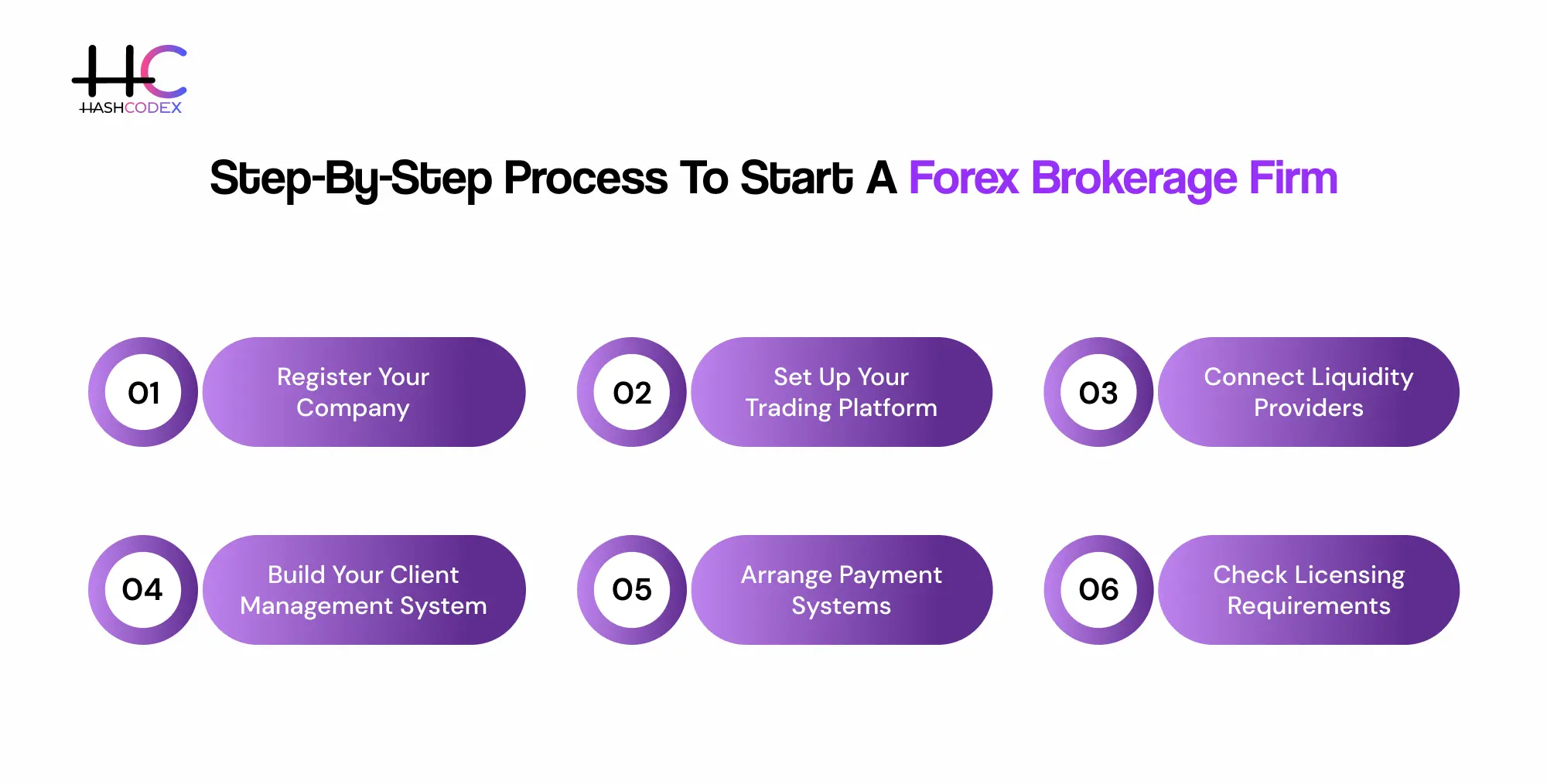
Starting a forex brokerage firm means bringing together trading systems, payments, clients, and compliance into one working setup. Once your planning decisions are clear, you can move into the setup process step by step.
Step 1: Register your company
The first step is to set up your business legally in a suitable location. This choice will affect your forex broker license and the rules you need to follow later.
- Choose a suitable jurisdiction
- Complete company registration
- Prepare basic legal documents
- Understand local forex regulations
This step creates the legal base for your forex brokerage setup and prepares you for licensing later.
Step 2: Set up your trading platform
Next, you need a trading platform where clients can place trades. This is the core part of your forex broker setup.
- Choose MT4 or MT5 platform
- Set up trading server access
- Configure a basic trading environment
- Ensure the platform is ready for client use
If you need unique features or a fully customized platform, you can also consider developing a trading platform to meet your brokerage goals.
The trading platform you choose will directly impact the trading experience you provide to your clients.
Step 3: Connect liquidity providers
After the platform is ready, you need liquidity connections. This helps your forex brokerage set up access to real market pricing.
- Select liquidity providers
- Connect pricing feeds
- Enable trade execution flow
- Test order processing
This ensures your forex broker setup can handle real market trades properly.
Step 4: Build your client management system
A client management system helps you handle important customer activities in one place. This includes onboarding, account management, communication, and tracking client information.
- Set up a smooth onboarding process
- Create and manage client accounts
- Track trading activity and user details
- Organize customer information securely
Forex CRM Software can help automate these tasks and make it easier to manage clients as your brokerage grows.
This keeps your operations organized and helps provide a better experience for your traders.
Step 5: Arrange payment systems
You need payment systems so clients can move money in and out of their accounts easily.
- Integrate payment gateways
- Enable deposits and withdrawals
- Support multiple payment methods
- Set up a transaction tracking system
This step ensures smooth money flow in your forex brokerage setup.
Step 6: Check licensing requirements
Before going live, you must understand the legal requirements for your forex brokerage setup.
- Identify the required forex broker license
- Check regional regulations
- Prepare compliance documents
- Ensure legal approval before launch
This step makes your forex broker business ready to operate legally.
Each step connects to the next. When done properly, they come together to form a complete forex brokerage setup that is ready for real operation.
The best way to start a forex brokerage depends on your budget, timeline, and whether you choose a white label setup or a custom-built brokerage.

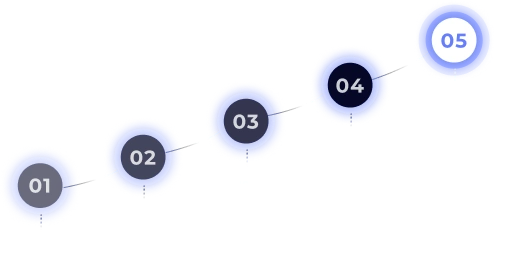
What Are the Different Forex Brokerage Models?
The brokerage model determines how client trades are handled, how orders reach the market, and where trading exposure sits. Common approaches include A Book, B Book, Hybrid, STP, ECN, and Market Maker models.
A Book Model: STP and ECN
A Book model sends client trades to external liquidity providers. STP (Straight Through Processing) brokers follow this approach by routing orders without a traditional dealing desk. ECN setups connect orders with a network of liquidity providers and market participants.
B Book Model: Market Maker
B Book model allows the broker to internalize client trades instead of sending every order externally. This is commonly associated with the Market Maker model, where the broker acts as the counterparty to client trades.
Hybrid Model
Hybrid model combines A Book and B Book approaches. The broker can route some trades externally and internalize others based on its trade handling and risk management rules.
White Label vs Custom Forex Brokerage: Which Option Is Right for You?
One of the first decisions when starting a forex brokerage is how you want to build your infrastructure. You can launch with a white-label solution or build your brokerage from scratch.
| Comparison Factor | White Label | Custom Brokerage |
| Setup time | 2–6 weeks | 3–7+ months |
| Initial investment | Generally lower | Generally higher |
| Customization | Limited | Extensive |
| Technology control | Provider-dependent | Greater control |
| Maintenance | Provider-supported | Managed by your team |
A white-label forex brokerage uses an existing technology setup under your own brand, making it easier to get started without building every component yourself.
A custom brokerage gives you greater control over your technology, features, and infrastructure, but requires more time, investment, and technical resources.
The right approach depends on your budget, timeline, business model, and long-term goals.
What Technology Do You Need to Start a Forex Brokerage?
A forex brokerage technology stack connects trading, liquidity, CRM, payments, KYC, risk management, and back office systems needed to run the brokerage.
Trading Platform
The trading platform is where clients view prices, analyse markets, place orders, and manage their trades. A brokerage can use MT4, MT5, cTrader, or a proprietary trading platform based on its products and business model.
Liquidity Provider and Liquidity Bridge
A liquidity provider supplies market prices and liquidity for trading. A liquidity bridge connects the trading platform with liquidity providers and helps route orders between them.
Forex CRM
A Forex CRM helps the brokerage manage leads, client accounts, onboarding, commissions, communication, and other client related activities from one system.
Trader’s Room
The trader’s room gives clients access to account details, deposits, withdrawals, trading history, documents, and other account related functions.
Back Office
The back office gives the brokerage administrative controls for managing accounts, trades, commissions, reports, permissions, and internal processes.
Payment Integration
Payment integration allows the brokerage to handle client deposits and withdrawals through supported payment methods. It can also support transaction tracking and payment reconciliation.
KYC and AML
KYC and AML tools help collect and verify client information, check identity documents, screen clients against applicable watchlists, and support ongoing compliance requirements.
Risk Management
Risk management tools help monitor client exposure, margin levels, positions, and trading activity. They can also support controls such as position limits and automatic liquidation rules.
What Licensing and Legal Requirements Are Needed to Start a Forex Brokerage?
Selecting a jurisdiction for a forex broker is one of the most critical decisions. Getting a forex broker license typically takes 3 to 9 months, depending on the jurisdiction.
1. Select a Jurisdiction
The jurisdiction determines the regulator, license type, capital requirements, and approval timeline.
| Tier | Jurisdiction | Regulator | Typical Time |
| Tier 1 | UK | FCA | 4 to 12 months |
| Tier 1 | Australia | ASIC | 5 to 8 months |
| Tier 1 | USA | NFA | 6 to 12 months |
| Tier 2 | Cyprus | CySEC | 4 to 8 months |
| Tier 2 | South Africa | FSCA | 3 to 6 months |
| Tier 2 | Mauritius | FSC | 3 to 6 months |
| Offshore | Seychelles | FSA | 2 to 4 months |
| Offshore | Vanuatu | VFSC | 2 to 4 months |
These are general timelines. Actual approval periods depend on the license, application, business structure, and regulator.
If the brokerage targets clients in a specific country, local rules must also be checked. For India, applicable RBI, FEMA, and SEBI requirements may need to be considered based on the services offered.
2. Meet Capital and Company Requirements
Register the legal entity and meet the minimum capital requirement for the selected license.
3. Prepare Licensing Documents
Applications can require a business plan, financial forecasts, ownership details, KYC and AML policies, risk procedures, and client disclosure documents.
4. Set Up the Required Structure
Depending on the jurisdiction, arrange qualified compliance personnel, banking, liquidity, trading technology, CRM, and back office systems.
5. Maintain Compliance
After licensing, continue meeting reporting, KYC, AML, record keeping, risk management, and client fund requirements.
How Much Time and Budget Are Needed to Build a Forex Trading Platform?
Building a Forex trading platform usually takes 4 to 9 months, depending on the features, third-party integrations, and customisation required.
The development cost generally starts from $25,000 for a basic platform and can exceed $200,000 for a fully customized solution with advanced trading features, CRM, payment gateways, and liquidity integration.
A clear feature roadmap and realistic budget help estimate the project timeline more accurately and support long-term business growth.
The platform is only one part of the total investment. See the full cost of starting a brokerage firm
Why Choose Hashcodex for Forex Brokerage Solutions?
By now, you've probably realized that starting a forex brokerage involves much more than launching a trading platform.
You need the right setup, the right tools, and a clear path to get everything running together.
At Hashcodex, we help bring those pieces together through our forex brokerage solutions. From trading platforms and client management systems to brokerage support tools, everything is designed to make the setup process easier to manage.
Instead of spending time coordinating with multiple providers, you can focus on what matters most, building your brand and attracting traders.
Thinking about launching your own forex brokerage?
Let's talk about your requirements and find the right solution for your business.
FAQ
How does a forex broker work?
A forex broker connects traders to the market through a trading platform and processes trades using liquidity providers in the background.
How much does a forex brokerage setup cost?
It depends on whether you choose a full setup or a white label forex solution. Full setups cost more due to licensing and infrastructure.
Do I need a forex broker license to start?
Yes, most countries require a forex broker license before offering trading services.
How long does it take to launch a forex brokerage?
A white label forex brokerage can be launched faster, while a custom forex brokerage setup may take several months to complete.









 NDA on Request
 Free Consultation – Let’s discuss your ideas